
How to Set Up a Complete Dental Instrument Reprocessing Room

A well-designed dental reprocessing room follows a structured workflow from contamination to sterilization. Proper layout, equipment alignment, and workflow separation improve efficiency, compliance, and safety.
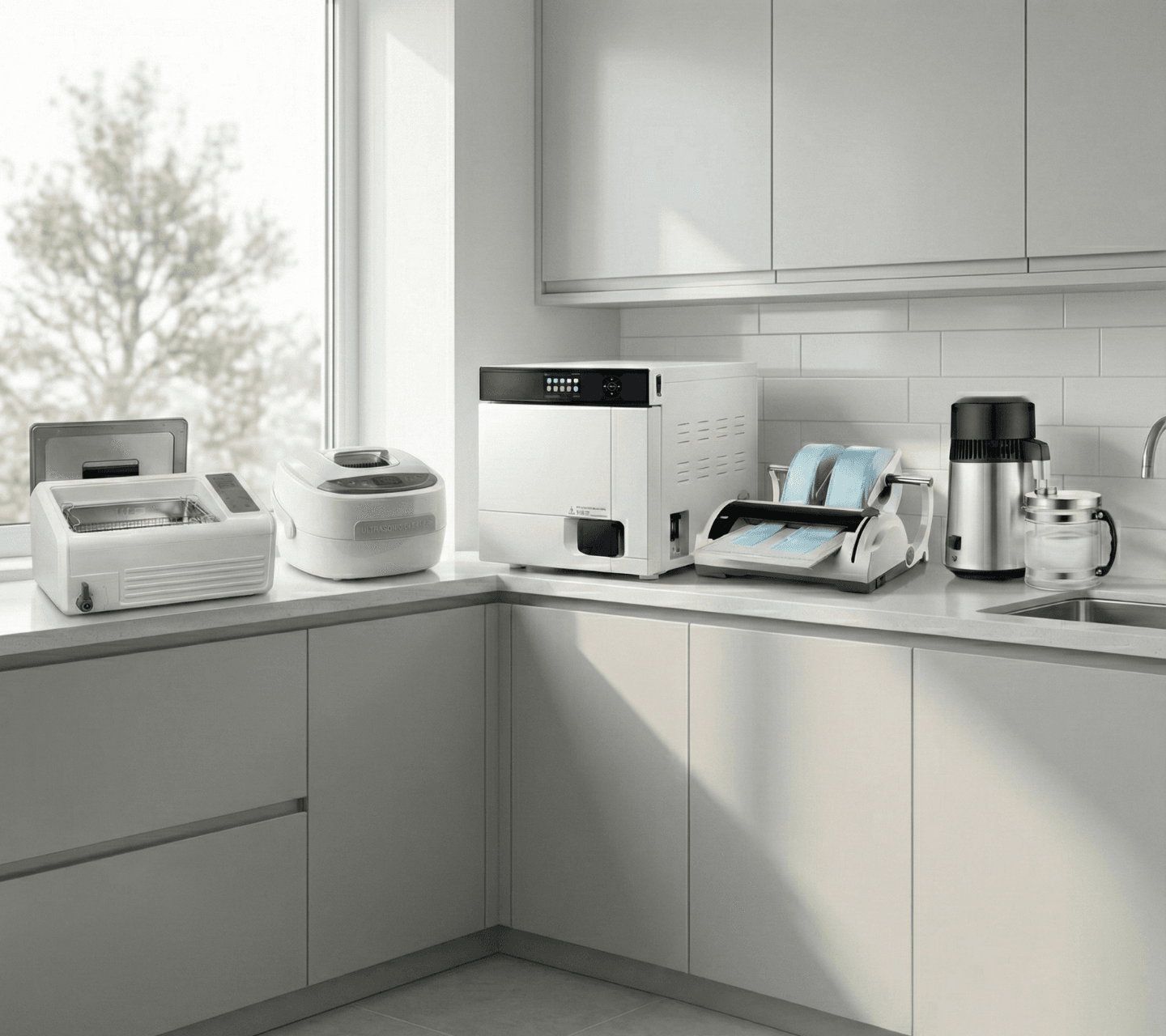
How to Set Up a Complete Dental Instrument Reprocessing Room
A dental sterilization room should not be designed around one machine. It should be designed around a workflow.
Safe instrument reprocessing is a sequence, and the room must support that sequence cleanly and consistently.
The CDC outlines that reprocessing requires multiple steps performed in the correct order every time, starting with cleaning, followed by drying, packaging, sterilization, and storage.
The 5 Essential Workflow Zones
A properly designed reprocessing room includes:
-
Receiving & Transport
Contaminated instruments arrive in covered, puncture-resistant containers. -
Cleaning & Decontamination
Organic debris is removed using manual or automated methods. -
Inspection & Packaging
Instruments are checked, dried, pouched, and labeled. -
Sterilization
Packaged instruments are processed in the autoclave. -
Cooling & Storage
Sterile packs are stored safely until use.
Equipment Should Match the Workflow
Each stage requires the right tools:
- Ultrasonic cleaners → cleaning stage
- Sealing machines → packaging stage
- Steam sterilizers → sterilization stage
- Water distillers → water quality support
- Lubrication units → handpiece maintenance
Common Mistakes
- Crossing clean and dirty workflow paths
- Underestimating packaging and storage space
- Designing around equipment instead of process
Why This Matters
A well-designed room:
- improves efficiency
- reduces errors
- increases compliance
- speeds up turnaround
Want to build a smarter reprocessing room, not just buy a sterilizer? Sterolux can help map your full workflow from cleaning to sterilization.
Our Recent News
Stay up to date on the future of sterilization, healthcare compliance, and sustainability.
Learn why water quality is critical to sterilizer performance, reliability, and maintenance. Discover how proper water support helps protect your investment over the long term.
Packaging mistakes can affect efficiency, consistency, and confidence throughout the sterilization process. Learn why packaging deserves more attention in modern reprocessing workflows.
Compare steam sterilization and dry heat sterilization from a workflow perspective. Learn why steam sterilizers remain the preferred choice for most modern healthcare practices.
Experience the Sterolux Difference
Join 500+ healthcare facilities that trust Sterolux for reliable, compliant, and efficient sterilization. Our team is ready to help you find the perfect solution.
Stay Updated
Get the latest updates on new products, industry insights, and exclusive offers.